Strategy · 9 November 2026
Co-Branding With Malaysian Dealers: Whose Name Goes on the Brochure?
Set rules for Malaysian dealer brochures, from logo placement and claim approval to warranty attribution, so buyers know who sells and supports the product.
By Digital Squad
Key Insights
- Give each logo a job and name who supplies the product, installs it and handles support.
- Let the party that can substantiate a claim approve it, including any limits that affect the purchase.
- Name the warranty provider and the first point of contact where buyers can find both before ordering.
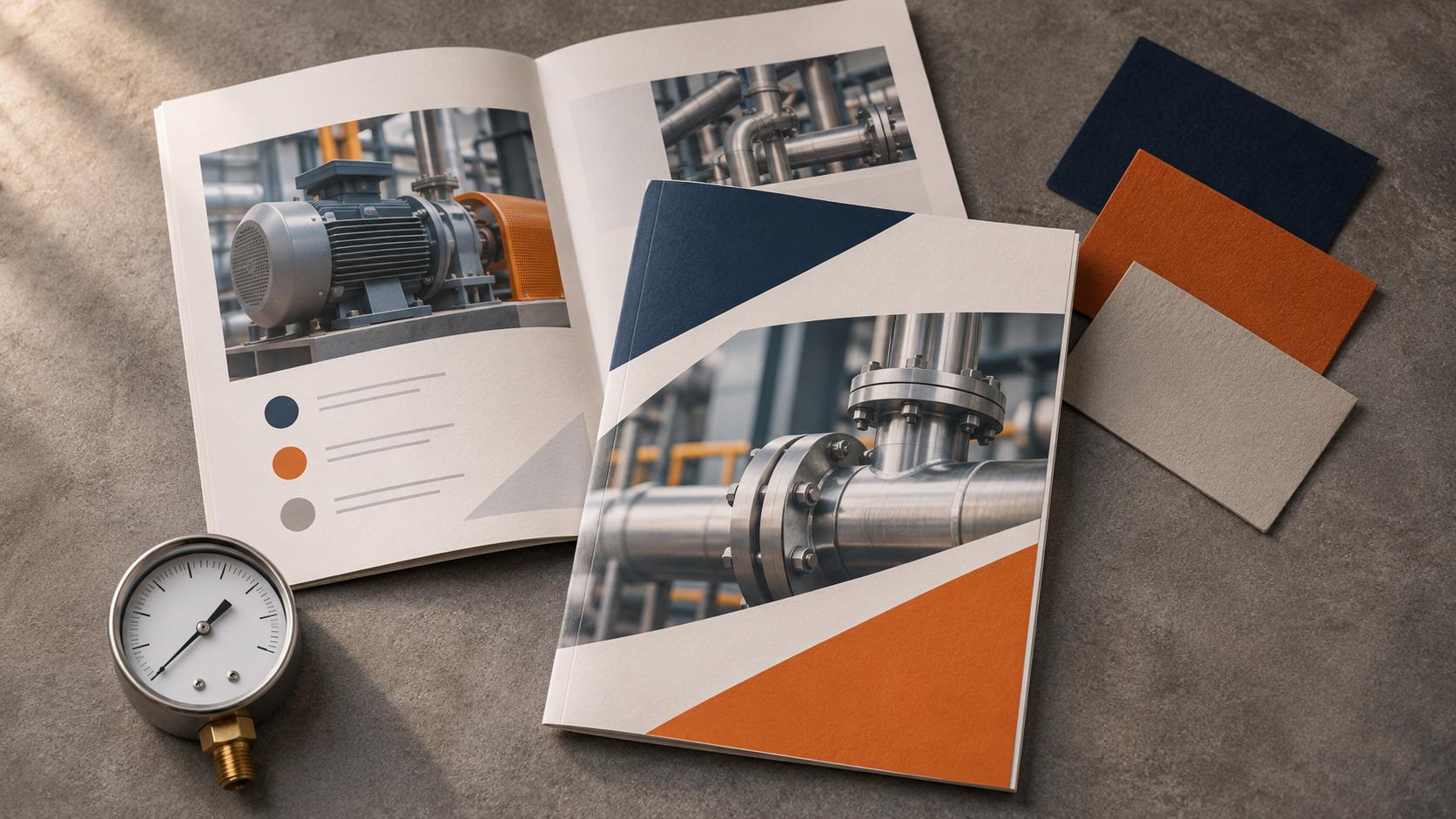
On the cover of a shared pump brochure, the manufacturer's logo sits beside the Malaysian dealer's. The final page promises a two-year warranty and on-site support. A purchasing manager forwards the PDF to a colleague who wants to know whether the dealer will send a technician to their plant and who pays for the visit. The brochure gives them a telephone number and two plausible answers.
A joint brochure needs to make those responsibilities clear even after it leaves the salesperson who handed it out. Someone may print a single page, save a PDF to a procurement folder or compare the offer with a second dealer's quote. If the logos do all the explaining, each reader has to work out the terms afresh.
Set the name order from the offer
For a manufacturer brochure distributed by several Malaysian dealers, the manufacturer usually has the clearest reason to lead on the cover. The dealer can be named in a designated panel that specifies its product range, territory or service role. Where the document promotes a dealer's own supply and installation package, a dealer-led cover may make more sense. In that version, the product brand identifies the equipment inside the package, while the dealer stands behind the services it sells.
Work out those rules with an actual offer in front of you. Write down who issues the quote, who invoices, who installs and who receives a service request. Then put the relevant role in words beside the logo or contact. “Authorised dealer for this range” helps the buyer understand the relationship. If authorisation covers only certain product families or activities, say which ones. The reader should be able to identify the business making the offer even if the logo marks look equally prominent.
That division of responsibility also helps define which buying questions the brand and dealer should answer in search. On a brochure, the immediate test is simpler. Hand a copy to someone unfamiliar with the arrangement and ask whom they would contact for a quote and whom they would expect to call after an installation problem.
Who can approve the sentence?
A statement like “delivery within three working days” belongs with the organisation that controls stock and dispatch. Its approver needs to confirm which items, delivery areas and ordering conditions the promise covers. A claim about pump performance belongs with the manufacturer's technical owner, who can specify the tested model, setup and operating conditions. In a shared offer, both kinds of claim may appear in the same paragraph.
Give the team one record of approved product claims, with a source, owner and any conditions attached to the wording. Set up a separate editable area for dealer-owned details. A dealer should be able to update a branch telephone number or demonstration schedule without reopening the product specification. Moving from “delivery available in Penang” to “installation available across Malaysia” changes the offer and belongs with the person who can commit the required coverage.
Keep the supporting detail close enough to survive a crop or translation. If a flow-rate figure only applies to a particular configuration, put that condition in the same block as the figure. Check that an English or Bahasa Malaysia edition preserves who makes the promise and when it applies. Advertising Standards Malaysia's code lists claim substantiation and guarantees among its topics and includes printed leaflets and point-of-sale material in its scope. Malaysian Code of Advertising Practice · ASA code scope and interpretation
Put the warranty handoff in plain view
Separate the warranty provider from the first contact for a claim. They may be the same business. If the dealer receives the claim and the manufacturer assesses it, put those two steps in order. If a manufacturer's product warranty and the dealer's installation workmanship coverage have different terms, give each a label and a route to its terms. Avoid a single warranty badge that can be read as covering both.
Try writing the instruction a customer would need with the equipment stopped. It might say to contact the supplying dealer with the model, serial number and proof of purchase, and explain where the dealer sends equipment claims. Use that wording only where the actual arrangement supports it. A buyer should also be able to tell how to reach support if their dealer has changed its telephone number or left the network. A stable manufacturer support page or dealer directory can provide that second route where appropriate.
Check the treatment of the terms before sign-off. Section II of the Malaysian Code of Advertising Practice says that when an advertisement expressly offers a guarantee or warranty, the full terms should be available in printed form for inspection and normally for the consumer to retain before purchase. Keep a route to the applicable terms in the brochure and have the responsible team review it alongside the offer, particularly when the brochure goes to consumers. Advertising Standards Malaysia code, section II
Make the next dealer edition easier to control
Give the artwork a manufacturer-controlled product section and a local offer section, with a small number of cover arrangements tied to who sells what. Provide finished templates for common use cases. If a dealer is preparing a trade-show sheet on short notice, a template with the correct contact and warranty blocks is easier to use than a folder of logos and a lengthy identity manual.
Before approving the next print run, open the exported PDF as a buyer would. Look at the pages sales teams are most likely to forward individually. Test any terms and support links on a phone, check that conditions remain readable at print size, and confirm that the contact can route a request for the model advertised. Put an edition date or reference on the PDF so both teams can identify older copies when a partner arrangement or claim changes.
Bring One Shared Brochure to a Branding and Communications Agency
A brochure your dealers already use is the best place to see where their roles are unclear. With the matching quote and warranty wording to hand, ask Digital Squad's Malaysia branding team to review the three together. The review can give your next edition a name order, an approval route and a support block the buyer can follow without calling the salesperson who sent it.