
Digital Marketing · June 24, 2025
Everything You Need to Know About Online Advertising in China
Looking to go big? We can guess your billion dollar question: How do I advertise in China online? The answer is as complicated, as you'd imagine.
By Digital Squad

Looking to go big? We can guess your billion dollar question: How do I advertise in China online?The answer is as complicated, as you’d imagine. Although non-Chinese business determined to enter the Chinese market should be cautious, they shouldn’t be afraid of the vast differentiation. The online Chinese landscape is saturated with a plethora of brands vying for consumer attention and international entrants already face a cultural barrier. But with a nation of over 800 million active Internet users, it would be a gross understatement not to partake in online advertising in China.With different social media platforms, online narrative and consumer behaviour, you can’t simply translate your current digital marketing strategy. Even global brands with a bottomless marketing budget aren’t exempted from marketing faux-pas in China either (we’re looking at you Burberry, Coach, Pepsi). So, how can you effectively go about advertising in China? If you’re a little (or really) lost on where to even start, we’re here to make the process a little less painful. Here’s your guide to understanding China’s online market and the best way to advertise in China.
Online Advertising in China: How does it compare to the rest of the world?
Put side by side, China stacks up as third against similar nations (US, UK, Australia and New Zealand) With US (6hrs 31m) ahead of the game with New Zealand (5hrs 55m), China comes just under at 5 hours and 52 minutes and Australia lagging at total internet use of 5 hours and 4 minutes per day. Additionally, social media penetration is the second highest in China (at 71% after Australia at 72%) compared to the US (70%), and the UK (67%).
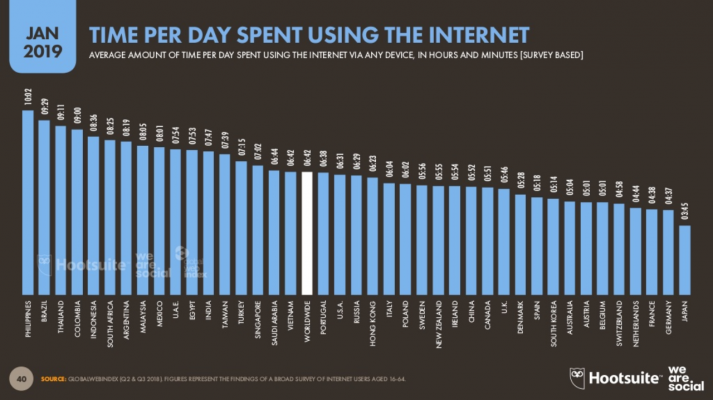
Time per day spent using the Internet. Source: We Are Social
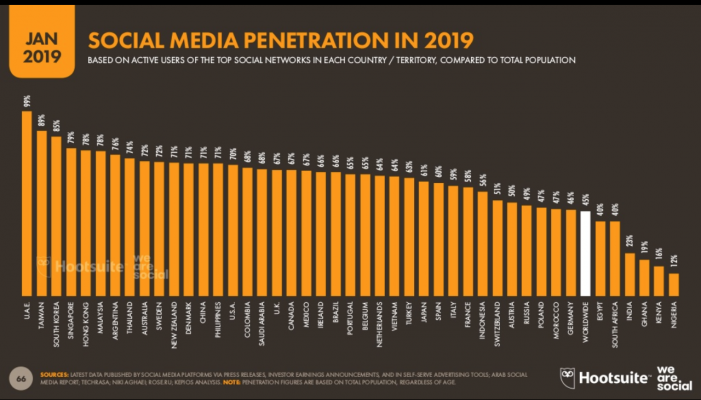
Social Media Penetration. Source: We Are SocialBoth sets of statistics translate into a population heavily associated with the Internet and social media use. Given the strength of the nation’s numbers online, targeting your business’ advertising is a profitable choice.
Best way to advertise in China: What device(s) are your consumers on?
Over 95% of China’s online users are accessing the Internet with their smart devices. Additionally, they spend over three hours on social media and e-commerce platforms daily. Compared to other regions, they top the charts with mobile Internet usage. The average US citizen spends just about 2.5 hours browsing the Internet on their mobile phones. Closely followed by users in the UK and New Zealand spending just over 2 hours and lastly, Australians at under two hours. Given these stats, it comes as no surprise that social media advertising in China is a must-have in your strategy. As a result, mobile ad revenue is on a sky-rocketing exponential growth compared to its desktop competitor and even other regions. The 2017 ad revenue split between mobile and desktop was AUD $35/$20 billion respectively with the same split predicted to be $71/17 billion by 2020. The numbers speak for themselves and advertising efforts should be predominantly catered to the smaller screen. However, this does not mean desktop ads should be completely eliminated, either.
Consumers: Who are they and where can you find them to advertise online in China?
Audience targeting in China requires more than prioritising the largest cities. Market maturity, category demand, local purchasing behaviour, and platform usage vary considerably between city tiers. Brands should validate those differences with current market data before setting budgets or creative strategy.
Digital platforms & Networks: Best Places to Advertise in China
China’s digital ecosystem is shaped by major networks including Baidu, Alibaba, and Tencent. Each spans different combinations of search, commerce, social, messaging, and video, so advertisers need platform-specific strategies rather than a direct copy of campaigns built for Western channels.
Baidu (Baidu Network: Search Engine Marketing)
Baidu is one of China’s major search platforms and operates its own paid-search ecosystem. Account eligibility, documentation, language requirements, and approval processes differ from Google Ads, so international advertisers should validate the current platform rules and local operating requirements before planning a campaign.
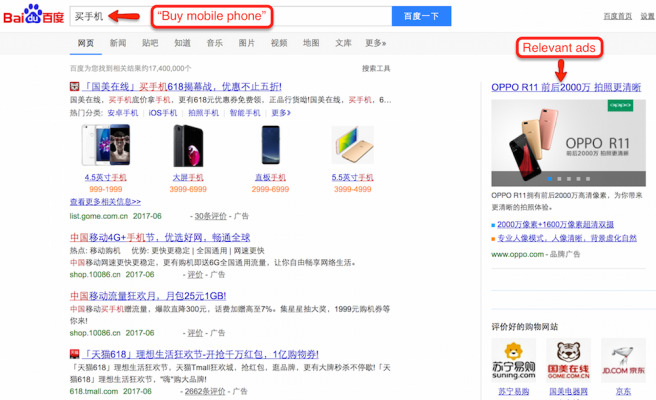
Baidu Paid Advertising. Source: Eggplant Digital
As with the search engines familiar to us, Baidu isn’t the only player in the market. Sogou is the Yahoo of our search engines with Qihoo 360 following right behind. Similar to advertising on Yahoo, Bing and the lot, advertising on different Chinese search engines are a matter of demographic reach.
WeChat (Tencent: Social Media Advertising)
WeChat combines messaging, payments, commerce, content, and services in a single platform. Its reach can make it valuable for advertisers, but account eligibility, regulation, bidding costs, and local operating requirements must be assessed before investment. Common formats include Moments ads, sponsored placements, and creator partnerships.
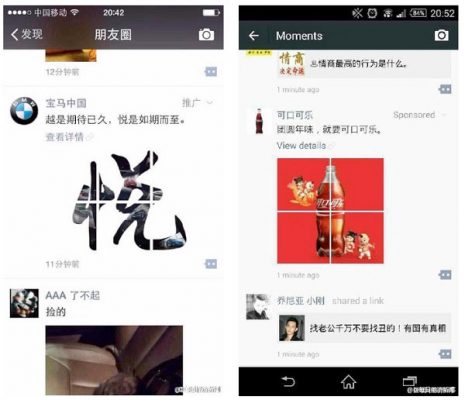
Advertising on WeChat. Source: Walk the Chat
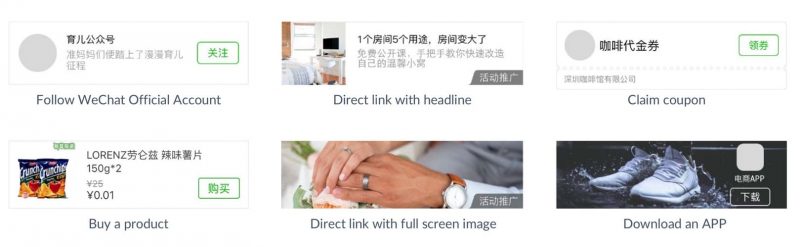
WeChat Sponsored Banner Ads. Source: Walk the Chat
Sina Weibo (Social Media Advertising)
Weibo Display Ad (Mobile). Source:
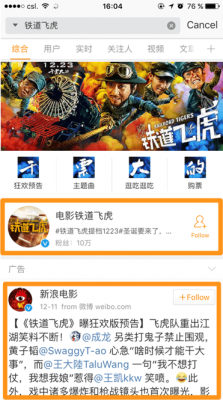
Weibo Search Engine Promotion. Source: Chozan Fan Headline: Also known as Fanstop advertising, there are three types of fan headlines. This option is a quick and efficient way to promote your brand or page.
If you want to promote a branded post, you can opt for a Fan Headline Post. This will place your promoted post at the top of a user’s newsfeed. Your post can be promoted not just to your existing followers but followers with similar likes and interests and those Weibo believes will be interested in your brand.

Weibo Fan Headline: Promoted Post. Source: Choz
This works similar to the first option but with the exception that if you have a KOL publish a post about your brand, you can promote it. The post can be promoted to the top of the feed of your KOL’s follower feeds
Just like promoting posts, you can promote your account at the top of the search function to followers deemed interested in your brand for a certain period of time.Fan Tunnel: Fan Tunnel on Weibo allows your posts or account to be featured in newsfeeds across your target audiences. This type of advertising works similar to Fan Headline with one key difference. Fan Headline advertising allows your posts or brand to be promoted to your followers and friends of followers. Weibo Fan Tunnel advertising gives you the option to push your posts or account to a larger Weibo audience not defined by followers who already interact with your brand. Similar to Facebook’s target audience advertising, you can push your advertising to a select demographic, age, gender and other interests. Similarly, your pricing for Fan Tunnel advertising will depend on general CPE or CPM whilst prices for Fan Headline advertising depends on the size of your followers.
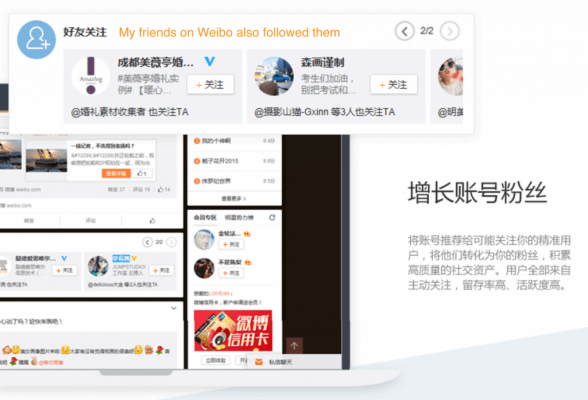
Weibo Fan Tunnel: Accounts. Source: Chozan
Taobao & Tmall (Alibaba Group: Marketplace advertising)
Alibaba is known for for its large marketplaces (think: the Amazon of the East). Alimama (Alibaba’s ad platform) allows brands to advertise on Alibaba’s marketplaces. Taobao and Tmall are China’s biggest e-commerce websites. Advertising on these platforms would be incredibly beneficial for brands selling a product. Additionally, its success stems from the ability to understand the entire customer journey across other Alibaba platforms such as AliPay, AliExpress and GaoDeMap. This better predicts consumer behaviours and patterns that can translate into effective advertising.
Tencent QQ (Instant Messaging App)
Tencent QQ is an instant messaging app with a variety of social offerings similar to WeChat. Advertising on this platform would be beneficial for anyone looking to target 3rd and 4th tier cities in China. In fact, 60% of users who hang out on Tencent QQ are under 30 years old and are mostly high schoolers and grad students. Thus, they have limited spending power. If a brand is looking to target a younger audience and garner loyalty from a young age, advertising on this platform can be fruitful. Brands with high volume products would be best suited for Tencent QQ as opposed to more mature categories such as luxury products and real estate.
Toudou Youku, Tencent Video & IQiYi (video streaming platforms)

Youku Pre-Video Ads. Source: Marketing to China
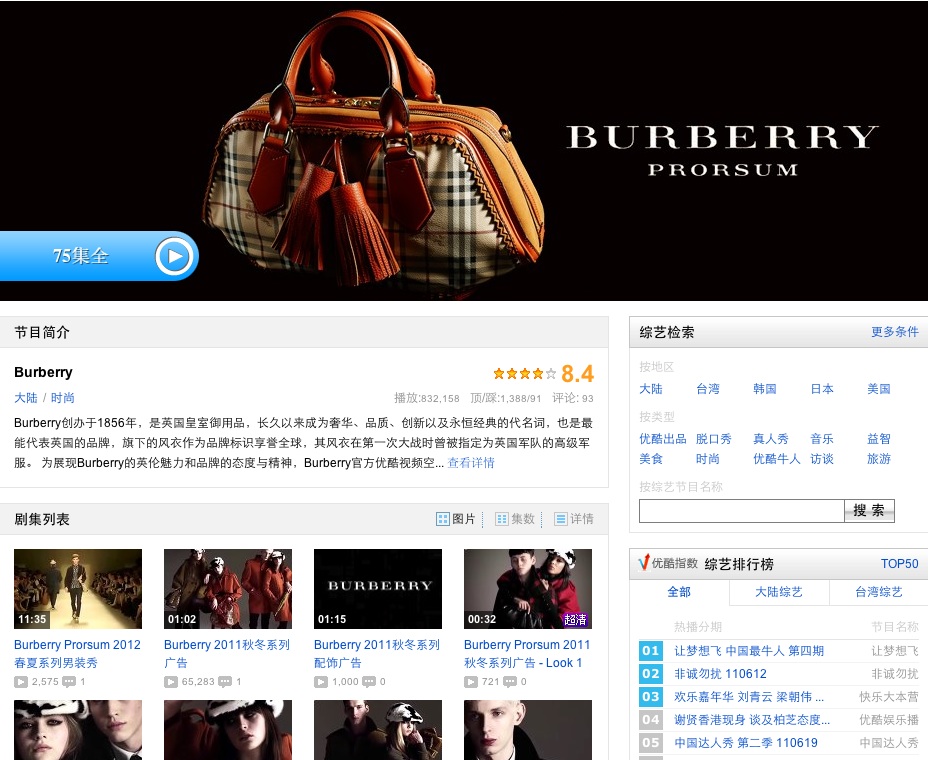
Youku Banner Ad. Source: Marketing to ChinaConsidered the YouTube of China, advertising on Youku is effective for a whole brand-style type of advertising. As of October 2018, Toudou Youku had 580 million registered users. It’s important to note that Youku does not function the way YouTube does. Whilst YouTube contains a majority of user-generated content (UGC), Youku hosts more professionally styled videos and users can even stream or download TV shows. Similar to YouTube’s paid services (YouTube Red), businesses can opt for banner ads, text links, in-video ads and pause ads. The analytics backend can also help segment audiences according to specific demographics, location, language etc.Youku topped the charts as the number one video streaming platform until late 2018 when Tencent Video took over followed closely behind by IQiYi. This has pushed Youku to third place. With over 500 million monthly active users, Tencent Video sits at the top of the video streaming services in China. Advertising video content on Tencent Video will garner significant eyeballs.
Zhihu (China’s question-answer platform)
Zhihu’s importance within the sphere of advertising lies in its trust factor. Zhihu to Baidu is like Quora to Google. If you haven’t noticed before, you may note that many Google SERP’s for query-based searches will bring up Quora results. The reason lies in the trust factor and Baidu considers Zhihu a trustworthy website providing useful information. Although this is a unique type of advertising, the reach on Zhihu is tremendous. Whether you decide to advertise on the platform or be a contributor to answer industry-related questions, you will promote brand awareness.
Effective Advertising in China: Should you do it?
No matter how successful your digital marketing strategy is in another market, any brand wanting to enter China will require a comprehensive rethinking of strategy. Beyond the cultural and language differences, the consumer behaves very differently. Moreover, your (potential) consumer hangs out on vastly different platforms compared to traditional western apps and websites. Entering the Chinese market is about context as much as it’s about the content you provide. If you are interested in targeting the Chinese consumer, don’t leave room to be blindsided. Experts in advertising to the Chinese consumer market can tell you where to advertise, whom to advertise to and understand the affordance of each digital platform. Looking to market to Chinese consumers? Hire a China digital marketing agency dedicated to providing advertising solutions and open your brand to the biggest consumer group in the world.