
Reimagining growth.
Hong Kong's #1 AI Automation Agency for Custom AI Solutions.
We engineer custom AI solutions that transform business operations, automate complex processes, and deliver measurable competitive advantage through machine learning, generative AI, and intelligent automation. Hong Kong AI programmes connect bilingual knowledge, human review, data governance and cross-border workflow requirements to a use case with a measurable operational owner.



Trusted by 450+ clients over 19 years across APAC





















































One of Hong Kong's Leading AI Development Consultancies — In-House Engineering, Production-Grade Intelligence.
Digital Squad's AI capability is built differently. Unlike agencies that bolt on third-party AI tools, our in-house team of ML engineers and data scientists — holding advanced degrees in machine learning, NLP, and computer vision — design and build production-grade AI systems from the ground up. From intelligent automation and predictive modelling to generative AI applications and AI-powered marketing infrastructure, we translate cutting-edge research into real, measurable business outcomes.
AI creates value in Hong Kong when it improves a defined customer or operational decision and can work safely across the organisation's data, languages and systems. We connect workflow discovery, data readiness, model choice, integration, security, governance and adoption, giving local and regional teams a practical route from prototype to accountable production capability.
From AI-powered content intelligence to computer vision pipelines and custom NLP systems, we build scalable AI capabilities that give organisations a durable, compounding edge — not experiments that never reach production.
Framework-first thinking
We connect the AI use case, data, model, workflow, integration, governance and adoption so operational improvement remains useful, measurable and responsibly managed.
Our Hong Kong AI framework starts with the workflow and measurable outcome, not a preferred model. English and Traditional Chinese inputs, data location, privacy, integration, evaluation, human review and change management are designed together. The result is a system that people can operate, govern and improve across local and regional contexts.

In-House AI Engineering Capability
We maintain a dedicated AI engineering team—not outsourced contractors. Our engineers hold advanced degrees in machine learning, data science, and software engineering, with production experience deploying AI systems at scale. This in-house capability enables rapid iteration, quality control, and knowledge continuity throughout development cycles—delivering solutions faster and more reliably than fragmented vendor arrangements.

Business-Outcome Focused AI Strategy
AI projects fail when technology leads strategy. We begin with business outcomes—identifying specific problems, quantifying improvement opportunities, and designing AI solutions that deliver measurable value. Our discovery process evaluates technical feasibility, data requirements, integration complexity, and ROI projections before development begins—ensuring investments focus on high-impact applications rather than experimental technology.

Full-Stack AI Development & Deployment
We handle complete AI solution lifecycles: strategy and discovery, data engineering and preparation, model development and training, integration and deployment, monitoring and optimisation. Our MLOps infrastructure ensures models perform reliably in production environments, with automated retraining pipelines, performance monitoring, and continuous improvement protocols. Solutions deploy on cloud platforms, on-premises infrastructure, or hybrid architectures based on security and compliance requirements.

Generative AI Integration Expertise
Hong Kong organisations often connect local operations with Greater China and regional platforms, creating real dependencies around language, data access, identity, security and ownership. We surface those constraints before building. Human reviewers remain accountable for high-impact outputs, while evaluation tests whether the system performs reliably across the languages and cases it will encounter. Governance names owners for exception handling and model changes.
We turn practical AI opportunities in Hong Kong into governed systems people can use, with adoption and operational value visible from the start.

Phase 1
AI Discovery & Feasibility Assessment
We map the Hong Kong workflow, users, English and Traditional Chinese inputs, data, systems, decisions, risks and baseline performance. The assessment identifies where AI can create measurable value, which regional integrations and approvals are required, and what human review must remain before development is prioritised.
Outcome: AI opportunity assessment with feasibility analysis, ROI projections, and implementation roadmap.
Phase 2
Proof-of-Concept Development
We build rapid prototypes demonstrating AI solution viability using sample data—validating approach before full development investment, then design the product and delivery architecture, including integrations, evaluation, guardrails and the decisions that remain human-owned.
Outcome: Working proof-of-concept demonstrating technical feasibility and expected performance.
Phase 3
Production Development & Integration
We develop production-grade AI solutions with full data pipelines, model training, testing, and integration with existing systems, then build and test the priority capability with representative data, user feedback and clear failure handling.
Outcome: Deployed AI solution operating in production environment with monitoring infrastructure.
Phase 4
Optimisation & Continuous Improvement
Production monitoring covers accuracy by language and use case, task completion, exceptions, latency, cost, adoption and the commercial or operational measure the system should improve. Feedback from Hong Kong users informs models, prompts, interfaces and workflow changes while governance records preserve accountability.
Outcome: Sustained AI performance improvement with ongoing adaptation to changing conditions.
Trusted by people just like you.

Anvesh Katuri
Founder at Hyperios
“From branding to execution, the team delivered clarity and strategy beyond expectations. Within 3 weeks we ranked on page one across 7 markets for competitive generative AI terms.”
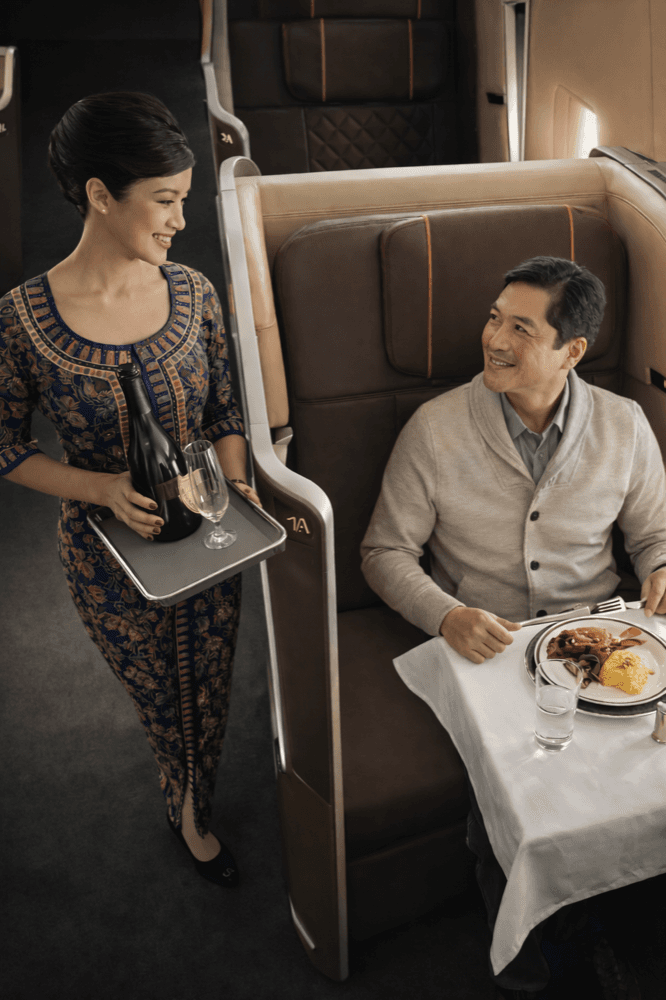
Ben Tan
KrisShop, Singapore Airlines
“After years of struggling with negative ROAS across multiple agencies, this was the first team that actually turned things around. The difference was night and day.”

Joanna Du
Head of Marketing at Cahoot
“The team brought strategic clarity we had never experienced before. Their SEO insights reshaped our entire content approach and quickly lifted visibility across our core programmes.”

Blog
Our latest insights



Contact
Request a Strategy Session
Tell us what you need to change, which markets matter and how success is measured. A senior strategist will review the brief before the first conversation.
FAQ
Frequently asked questions
Practical answers for organisations planning growth in Hong Kong.
We build AI around a real workflow rather than a technology label: knowledge assistants, document processing, classification and prediction, copilots, agents, generative integrations, automation pipelines and the MLOps needed to keep them reliable. The choice may involve GPT-4, Claude, Gemini, an open-source model or a custom model, depending on data, differentiation, cost and risk. For Hong Kong organisations, discovery includes English and Traditional Chinese inputs, cross-border systems, access permissions, human escalation and the accountable owner after launch. A contained release is tested against realistic cases with baseline measures, fallback rules and maintenance responsibilities before anyone recommends wider deployment.
We use existing models when they give a reliable route to value, and build custom components when the workflow, data or differentiation requires more control. Assessment covers the business objective, available data, language needs, integration effort, access rules, operating cost and the quality threshold that makes the system fit for release. A Hong Kong team may need an existing LLM connected to approved knowledge, bilingual retrieval and human review rather than a new model. We document why the chosen approach fits and test it against representative cases before committing to production scope.
Consulting establishes the problem worth solving, the data and system constraints, the operating owner, the business case and the sequence of decisions. Development turns that agreed direction into models, prompts, integrations, evaluation, deployment and maintenance. Keeping both together means a recommendation is judged against what the team can actually operate, not a speculative roadmap. For a Hong Kong or regional programme, we also clarify bilingual inputs, cross-border dependencies, human approval and handover before deciding whether a proof of concept should become a production capability.
A focused proof of concept usually takes four to eight weeks when the problem, data access and evaluation cases are clear. A production release with integrations, monitoring, permissions, documentation and adoption support commonly takes three to six months, depending on complexity and the quality threshold required. We set the decision gates before development: what must be demonstrated, who reviews it, what happens when confidence is low and which dependencies belong to the client or regional team. This gives Hong Kong stakeholders a realistic sequence instead of a promise based on a demo.
Yes. We can begin with a workflow and the people responsible for it, then assess data sources, permissions, quality, systems and the operational capability needed to support AI. The first stage may create a governed data path, retrieval layer, evaluation set or integration before model work begins. We also document the operating process and run handover or capability sessions so the client team understands review, escalation and maintenance. For Hong Kong teams, that includes clarifying which local or regional owner controls inputs and decisions after launch.
Production readiness means more than a convincing output. We document data sources and minimisation, access controls, API protection, evaluation cases, monitoring, failure modes, fallback and human escalation, then name the owners for incidents, prompt or model changes and retraining. Representative English and Traditional Chinese inputs and cross-border dependencies are tested where they affect the workflow. We also check adoption and handover, so the client knows how to operate the system after release. A prototype is accepted only as a decision point; deployment requires evidence that quality, safety and maintenance are understood.
An engagement starts with a scoping and data-readiness session, followed by a written use case, success measure, risk boundary and delivery plan. We then design the workflow, build a contained proof, evaluate realistic cases, decide whether to proceed, and develop the approved production path with integrations, monitoring and documentation. Reviews involve the people who own the process, data and customer or operational outcome. The Hong Kong handover covers bilingual test cases, access, escalation and maintenance, so the client receives an explainable system rather than a black box.
The relevant question is the workflow, not a list of industries. We can apply AI to marketing and content operations, customer service, knowledge management, data analysis, professional services and controlled automation where the operating case is clear. We assess users, data, systems, permissions, risk, integration effort, adoption and measurable value before recommending development. For Hong Kong and regional teams, that may include bilingual knowledge retrieval, cross-border access, document handling or an assistant that preserves source context for a regulated process. The engagement names the human owner, evaluation cases, fallback and maintenance path, so a release improves time, quality, completion or commercial progression instead of becoming an ungoverned demonstration.