Reimagining growth.
Jakarta's #1 Digital Transformation Consultancy for Enterprise Evolution.
Digital Squad helps Indonesian organisations turn digital change into a more usable operating model, not a collection of disconnected tools. We connect process, data, martech, automation and enablement to adoption, cycle time and commercial outcomes, giving leaders a staged route from today’s constraint to a capability the team can run.



Trusted by 450+ clients over 19 years across APAC





















































Indonesia's digital transformation partner for a transformation programme that turns fragmented customer and operating systems into a clearer route to growth.
Digital Squad's digital transformation practice is built on 19 years of helping organisations in Indonesia modernise their marketing infrastructure, streamline operations, and adopt AI-augmented systems that create genuine competitive advantage. We combine strategic diagnosis, process redesign, and technology implementation expertise to deliver transformation programmes that are phased and built to produce lasting results, not blueprints that stay on the shelf. For digital transformation, local search behaviour, mobile expectations and city-level demand inform the content, channels and response path. For teams operating across Jakarta and the wider Indonesian market, we connect Bahasa Indonesia and English discovery with adoption, martech integration and the operational measure that proves the change improved performance.
Digital transformation in Indonesia has to change daily work without losing the commercial purpose behind it. We examine how teams in Jakarta and other centres actually use their tools, then connect process mapping, martech integration, data governance and enablement to Bahasa Indonesia and English workflows where language affects adoption. The diagnosis identifies the handoffs, approvals and measures that need to change before a platform or automation programme is introduced.
The consequence is a transformation roadmap that operations can run, not a technology wish list. Leaders receive a sequenced view of adoption, cycle time, quality and commercial contribution, with owners for training, integration and review. As the improved process becomes routine, the organisation can expand the change to adjacent teams while preserving governance and learning from the people who use it every day.
Framework-first thinking
We connect transformation strategy with people, processes, data, technology and adoption so approved priorities become measurable improvements in experience, efficiency and growth.
Indonesia transformation maps how customers, branch teams and field operations use Bahasa Indonesia and English across workflows, data and systems. Local operating constraints shape integration and adoption, while regional platforms retain clear ownership and decision exchange. Releases are prioritised against measurable movement in revenue, efficiency, experience or operational clarity.
Award-winning APAC expertise, applied with Indonesian context
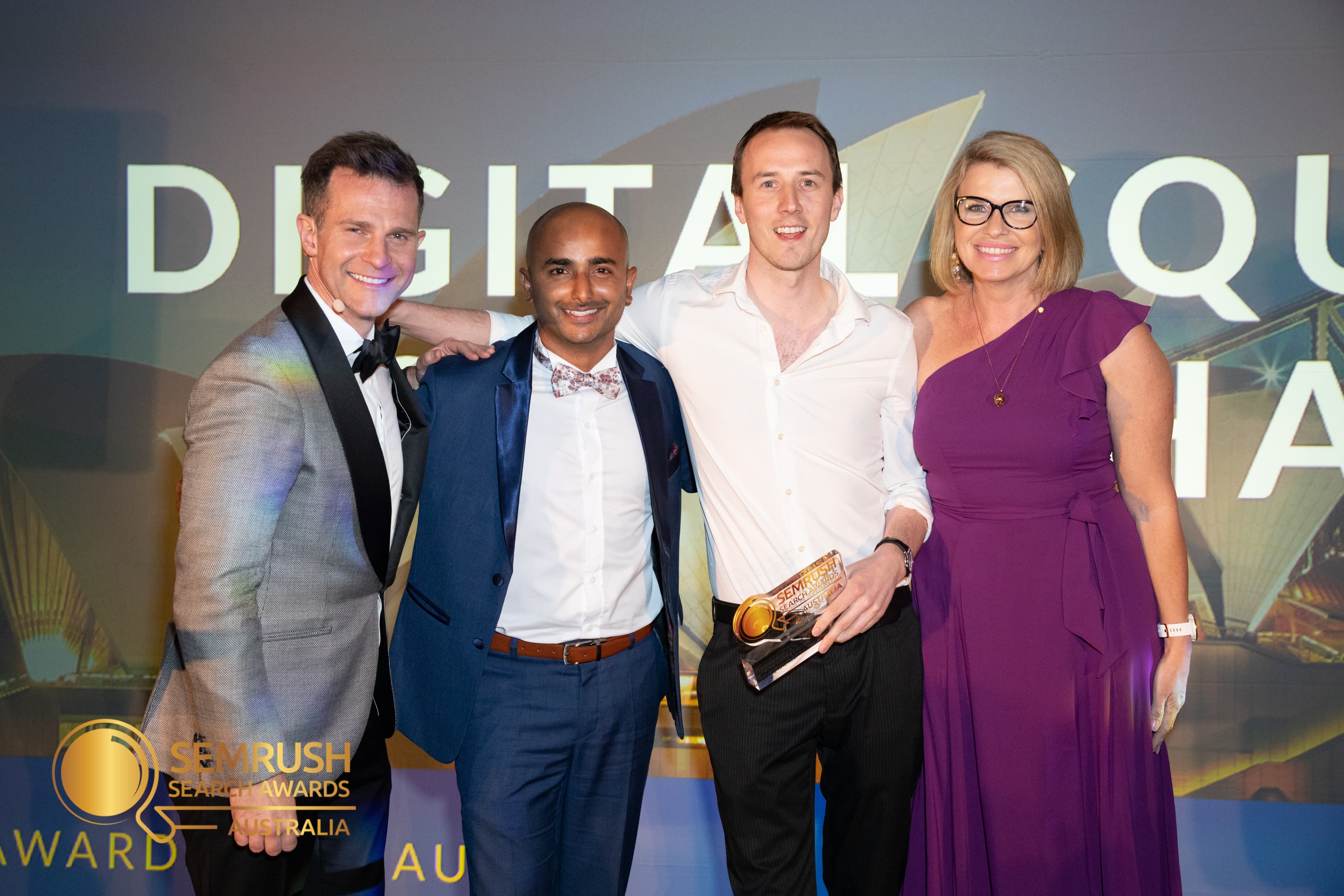
Digital Squad's 19 years of APAC experience, 450+ client relationships and four Semrush Awards support transformation decisions with commercial discipline. We connect the customer and operating problem to process, platform, data and adoption choices for Indonesian teams, considering Bahasa Indonesia and English users in Jakarta and growth centres. The work keeps technology in service of an outcome, so a completed implementation is not mistaken for business progress.

A digital transformation system with one accountable direction
Transformation creates durable value when it is connected to the work, evidence and decisions teams already own. We identify where integration, automation, data governance or enablement can remove delay or improve judgement, then define the adoption, ownership and review requirements. Indonesian teams can test the change against real customer and operating journeys before a wider rollout, keeping Jakarta and beyond connected to a measurable capability rather than a technology milestone.

Execution built around buyers, proof and practical ownership
The roadmap connects customer experience, workflow redesign, integration, adoption and change ownership, making clear what must be proven in smaller releases before broader change is committed. Cross-functional owners test each release against customer and operating reality, using the findings to adjust workflow, integration or adoption support before the next stage is funded. The local change team reviews the effect on customer and operating handoffs before the next capability or integration release proceeds.

Measurement that informs the next commercial decision
Service, operational, adoption and commercial measures show whether change is improving the intended experience instead of merely completing a technical milestone. In Indonesia, this evidence helps the team direct the next investment toward the customer, operational or adoption result that justified the programme. Leaders receive a balanced view of customer, operational, adoption and commercial movement, enabling them to direct change toward the outcomes that justified the programme.
We turn digital transformation insight in Indonesia into prioritised delivery, measurable learning and accountable commercial action that reflects Jakarta and the wider market.

Phase 1
Transformation Discovery & Strategy Design
We start with the process that is constraining growth, the people who use it and the evidence showing where time, quality or commercial value is being lost. The assessment considers Jakarta, Surabaya, Bandung, Bali and wider operating teams, including Bahasa Indonesia and English user needs, martech and system dependencies, data governance and enablement. It produces a transformation roadmap tied to adoption, cycle time, operating efficiency, quality and commercial contribution.
Outcome: Digital transformation strategy with prioritised initiatives, business cases, and implementation roadmap.
Phase 2
Foundation Building & Quick Wins
The transformation blueprint maps the priority journeys and operating problems, target-state capabilities, data and platform dependencies, release sequence, owners, adoption actions and measures. It provides a realistic route from diagnosis to change. The digital transformation blueprint is checked against Bahasa Indonesia and English journeys, mobile-first research and Google Search, Instagram, TikTok and WhatsApp before priorities are fixed. Local owners can see the release conditions before rollout.
Outcome: Transformation infrastructure with early successes building momentum and stakeholder confidence.
Phase 3
Scaled Implementation & Integration
Implementation connects the agreed process, platform, data and enablement changes in a sequence that teams can absorb. Specialists work with product, marketing, service and operations owners to integrate systems, test permissions and handoffs, and resolve exceptions in context. Indonesian users review language and adoption needs before wider rollout, while each release has an operational measure and accountable owner.
Outcome: Deployed transformation initiatives delivering operational improvements and enhanced capabilities.
Phase 4
Optimisation & Continuous Evolution
We measure transformation by the change in how work is done, not by the presence of a new tool. Adoption, cycle time, operating efficiency, quality and commercial contribution are reviewed with user and owner feedback across Jakarta and the wider market. Leaders can see what is embedded, where the process still fails and which integration, enablement or investment decision should follow.
Outcome: Sustained value realisation with embedded capabilities enabling ongoing digital evolution, clearer ownership and measurable improvement in efficiency, experience or growth.
Trusted by people just like you.

Anvesh Katuri
Founder at Hyperios
“From branding to execution, the team delivered clarity and strategy beyond expectations. Within 3 weeks we ranked on page one across 7 markets for competitive generative AI terms.”

Ben Tan
KrisShop, Singapore Airlines
“After years of struggling with negative ROAS across multiple agencies, this was the first team that actually turned things around. The difference was night and day.”

Joanna Du
Head of Marketing at Cahoot
“The team brought strategic clarity we had never experienced before. Their SEO insights reshaped our entire content approach and quickly lifted visibility across our core programmes.”

Blog
Our latest insights



Contact
Request a Strategy Session
Tell us what you need to change, which markets matter and how success is measured. A senior strategist will review the brief before the first conversation.
FAQ
Frequently asked questions
Practical answers for organisations planning digital transformation in Indonesia, with local buyer context, delivery ownership and measurable commercial progress made clear.
It means changing how people, process and technology work together to produce a better outcome. We may address martech, customer journeys, data flows, automation, governance or team capability, but the starting point is the operating problem and the people affected. The plan makes dependencies, ownership and measurable progress visible. For an Indonesian organisation, the work may need to connect Jakarta leadership with national teams, local-language customer journeys and APAC reporting without assuming every team has the same systems or adoption readiness.
We diagnose the current process and target outcome, map systems and stakeholders, then prioritise changes by value, feasibility and risk. A staged roadmap combines quick operational improvements with the foundations needed for scale. Workshops and artefacts are designed for the teams who must adopt the change, not only the project sponsor. We make the first release concrete, including data ownership, approval points, training, local-language or mobile implications and the handoff between marketing, sales, service and technology teams.
AI is considered where it improves a defined workflow, such as insight synthesis, triage, knowledge access or repetitive administration. We test data quality, controls, human review and expected value before recommending automation. A transformation may require no AI in one process and a carefully governed AI component in another. English and Bahasa Indonesia inputs can be assessed where customer or staff language affects the workflow, but language capability alone is not a reason to automate a process that lacks ownership or reliable data. We also map the handoff into operations, so a faster recommendation still reaches the person who can act on it.
IT modernisation may upgrade systems or infrastructure; transformation also changes the operating model, decision rights, processes and customer or employee experience around those systems. The two can overlap. We keep the commercial and adoption outcome in view so a technical upgrade is not mistaken for business change. That distinction matters when a regional platform is introduced into Indonesian operations: the project must address local workflows, response expectations and training as well as the technical migration.
There is no responsible single timeline. A diagnostic or pilot can be contained, while broader change depends on systems, data, stakeholders, procurement and adoption. We break the work into decisions and releases, with measurable outcomes for each stage. That lets leaders adjust scope as evidence and organisational readiness develop. A first milestone might prove one customer or sales workflow in Jakarta, after which the team decides whether the change is ready for national rollout or APAC coordination. Each release also has an owner, adoption signal and operating fallback, so progress is visible when a dependency moves more slowly than the technology.
Yes. Early-stage teams often benefit from a clear current-state map, a small number of prioritised opportunities and a practical measurement baseline. We can help distinguish urgent fixes from longer-term capability, then prepare the organisation for implementation without assuming a large platform purchase or a fully formed internal transformation office. The work can begin with a lean team, one journey and clear decision rights, then expand when local adoption, data access and commercial value justify it.
We define a discovery or first-release scope with explicit outputs, decision points and a review at the end. If the evidence supports further work, the next stage is agreed with the right owners and investment. This keeps the programme accountable to adoption, efficiency and commercial value rather than duration alone. A regional sponsor can see what Indonesia has learned, what remains local, and which next release is genuinely ready for APAC reuse instead of committing to an open-ended transformation label.