Reimagining growth.
Jakarta's #1 Marketing Automation Agency for B2B Lead Nurturing.
Digital Squad helps Indonesian teams make follow-up timely, relevant and measurable by connecting CRM data, lead stages, scoring, nurture and routing. We design lifecycle journeys around the way people move from search, social or enquiry into a commercial conversation, reducing manual friction without hiding the human decisions that matter.


Trusted by 450+ clients over 19 years across APAC





















































Indonesia's marketing automation partner for an automation programme that makes relevant follow-up, handoffs and measurement more dependable.
Digital Squad builds marketing automation systems that connect your CRM, paid channels, and content strategy into a single intelligent revenue engine. For marketing automation, local search behaviour, mobile expectations and city-level demand inform the content, channels and response path. For mobile-first buyers moving from Google, Instagram, TikTok and WhatsApp into CRM, we connect Bahasa Indonesia and English intent to routing, nurture, consent and stage progression.
Marketing automation in Indonesia should make follow-up timely without making every prospect feel processed. We connect CRM stages, scoring, consent, routing and nurture around Jakarta and wider demand, with Bahasa Indonesia and English paths where the question or response changes. The design starts with the handoff between marketing and sales: what qualifies, who responds, what context they receive and how the next step is recorded.
Once that logic is reliable, commercial teams can see where leads stall and which messages help the right opportunity progress. We use response time, stage conversion, nurture contribution and retained revenue to refine scoring, routing or content, rather than adding more automation by default. The result is a follow-up operation that can support B2B, SaaS and commerce growth without losing accountability at the point of contact.
Framework-first thinking
We connect lifecycle logic, data quality, segmentation, content, CRM ownership and human follow-up so automation improves customer progression, sales velocity and revenue.
We define the lifecycle, qualification rule, message, consent requirement, owner and handoff before automation is expanded. Evidence from Bahasa Indonesia and English journeys then shows which nurture and routing changes improve stage conversion, response time, pipeline velocity and retained value.
Award-winning APAC expertise, applied with Indonesian context
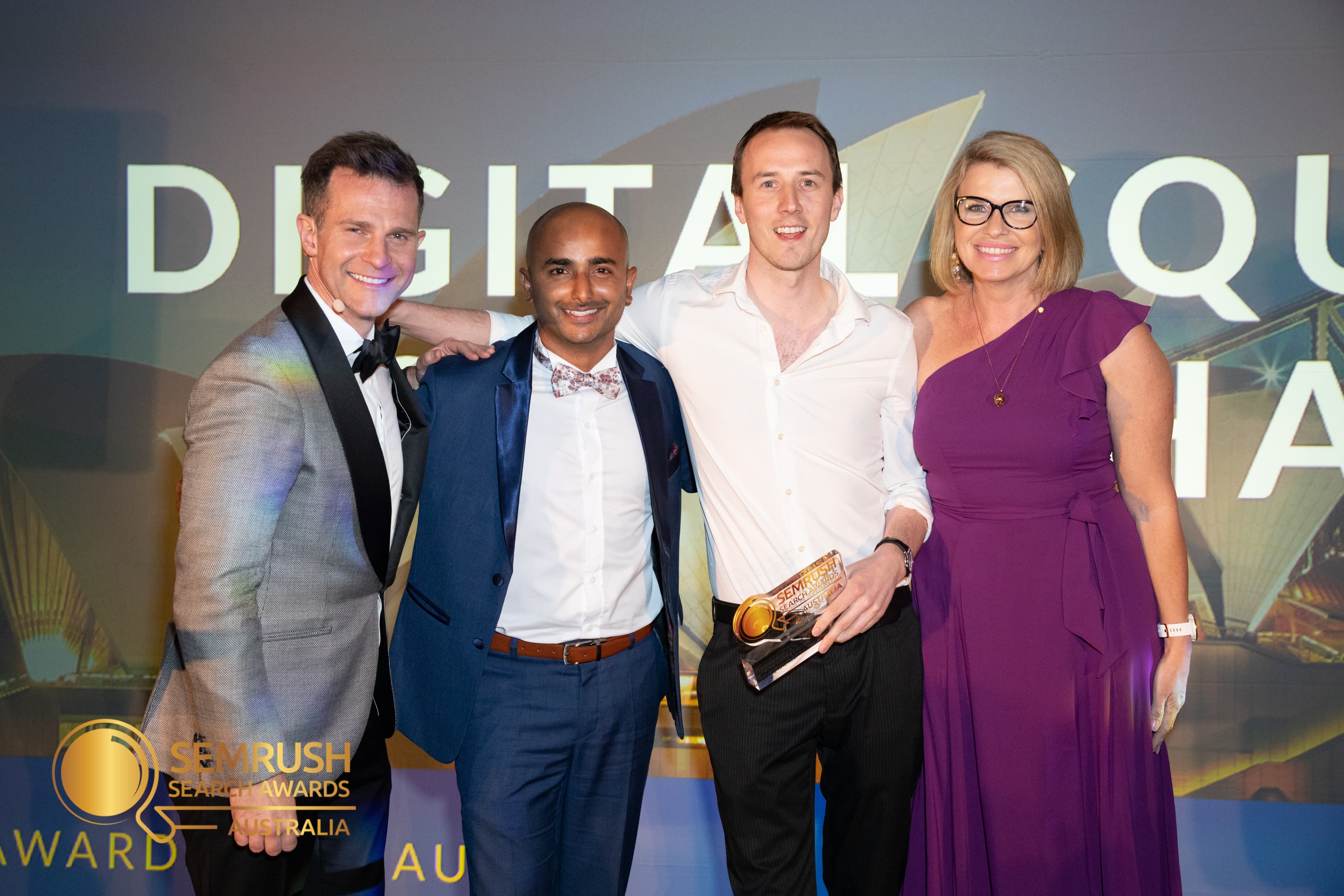
Digital Squad's 19 years of APAC growth work, 450+ client relationships and four Semrush Awards inform automation that connects marketing, sales and service. In Indonesia, we apply that experience to Bahasa Indonesia and English journeys from Jakarta and growth centres, joining CRM quality, routing, nurture, consent and closed-loop reporting to response and retained revenue. The outcome is revenue infrastructure that reduces manual gaps without making human ownership disappear.

A marketing automation system with one accountable direction
Automation works when signals, rules and human decisions are designed together. We use demographic, behavioural and engagement evidence to prioritise Indonesian prospects, then connect scoring to CRM routing, alerts, nurture and personalised follow-up. The journey can distinguish early research from sales-ready intent across Bahasa Indonesia and English, while owners in Jakarta and the wider market can see why a lead moved and what should happen next.

Execution built around buyers, proof and practical ownership
Sales, service and operations context shape qualification, consent, alerts and human handoffs; edge-case testing protects trust and avoids hidden work for the team receiving the lead. Sales and service owners validate the context that arrives with an automated handoff, allowing the workflow to improve response quality as well as timeliness for the local team.

Measurement that informs the next commercial decision
Activation, progression, response quality, conversion and workflow reliability guide ongoing changes to triggers and content, making automation a maintained growth capability. In Indonesia, this evidence helps the team refine the triggers, content or ownership of automated journeys based on observed progression and operational reliability. Reporting shows which automated journeys are creating progression, which are creating friction and which need revised triggers, content or ownership before more complexity is introduced.
We turn marketing automation insight in Indonesia into prioritised delivery, measurable learning and accountable commercial action that reflects Jakarta and the wider market.

Phase 1
Process Audit & Platform Assessment
We begin by tracing how a lead or customer moves from first signal to meaningful progression. The assessment reviews CRM data, lead stages, scoring, consent, nurture, routing, platform use and sales response across Jakarta, Surabaya, Bandung, Bali and other priorities, with Bahasa Indonesia and English journeys considered where they change the message or handoff. It produces a prioritised automation roadmap tied to response time, stage conversion, nurture contribution, pipeline velocity and retained revenue.
Outcome: Comprehensive automation strategy with platform recommendations and implementation roadmap.
Phase 2
Platform Configuration & Integration
The automation blueprint defines priority journeys, audiences and triggers, data and consent requirements, content, integrations, decision rules, human handoffs, testing and measurement. It sequences high-value workflows before more complex automation is introduced. The marketing automation blueprint is checked against Bahasa Indonesia and English journeys, mobile-first research and Google Search, Instagram, TikTok and WhatsApp before priorities are fixed.
Outcome: Fully configured automation infrastructure ready for campaign deployment.
Phase 3
Campaign Development & Deployment
The lifecycle is improved through practical workflows that marketing, sales and service owners can operate. Specialists refine data, scoring, consent, nurture, routing and closed-loop reporting, then test messages and handoffs against real Indonesian journeys. Each workflow has a conversion or response measure, a named owner and a validation route before automation is expanded to more stages or audiences.
Outcome: Active automation campaigns nurturing leads and accelerating pipeline progression.
Phase 4
Optimisation & Performance Reporting
Reporting connects automation to response speed, qualification, pipeline progression and revenue rather than email activity alone. We read stage conversion, nurture contribution, pipeline velocity and retained revenue across Jakarta and the wider market, then use evidence to refine audience, message, routing or workflow. Leaders can see where follow-up is helping demand progress, where data is blocking it and which lifecycle decision should follow.
Outcome: Sustained improvement in lead quality, sales velocity, and marketing-attributed revenue, with governance that keeps journeys accurate and responsive as data, teams and markets change.
Trusted by people just like you.

Anvesh Katuri
Founder at Hyperios
“From branding to execution, the team delivered clarity and strategy beyond expectations. Within 3 weeks we ranked on page one across 7 markets for competitive generative AI terms.”
Ben Tan
KrisShop, Singapore Airlines
“After years of struggling with negative ROAS across multiple agencies, this was the first team that actually turned things around. The difference was night and day.”

Joanna Du
Head of Marketing at Cahoot
“The team brought strategic clarity we had never experienced before. Their SEO insights reshaped our entire content approach and quickly lifted visibility across our core programmes.”

Blog
Our latest insights



Contact
Request a Strategy Session
Tell us what you need to change, which markets matter and how success is measured. A senior strategist will review the brief before the first conversation.
FAQ
Frequently asked questions
Practical answers for organisations planning marketing automation in Indonesia, with local buyer context, delivery ownership and measurable commercial progress made clear.
Automation can support lead capture, enrichment, scoring, segmentation, nurture, reminders, routing, reporting and lifecycle messages when the rules and data are reliable. We map the process first, then automate the repeatable parts. Human approval remains important for high-value, sensitive or ambiguous interactions. An Indonesian journey may also need language-aware routing, mobile or WhatsApp context and a clear owner for a local enquiry before a regional nurture sequence is allowed to run.
The platform should fit the existing CRM, data model, team capability and journey complexity. We can assess the current environment or help compare options, then focus on integrations, definitions and adoption rather than a tool purchase alone. The implementation plan records what the system must do for marketing and sales. We also check whether local-language fields, marketplace or messaging signals and APAC account ownership can be maintained without creating duplicate or conflicting records.
Scoring combines fit and intent: account or role relevance, behaviour, content response and meaningful stage signals. We agree the rules with sales, test them against accepted and rejected leads, and refine them as evidence accumulates. A score matters only when it changes prioritisation and improves the next response. For Indonesia, the model can retain source, language, city, product and WhatsApp or social context where those signals help a salesperson decide what to do next, rather than treating every interaction as equal intent.
A focused journey can be mapped and activated quickly; a broader programme depends on data quality, CRM integration, consent, content and the number of lifecycle stages. We sequence the work so the team can validate definitions and routing before expanding. Milestones show when the system is ready for the next audience or market. A first release may prove one Indonesian segment or handoff, then add national and APAC journeys after the team has tested ownership, language and response quality.
We define the handoff, ownership, response expectation and context that must travel with a lead or account. The CRM can receive source, content, score and engagement history, while sales feedback returns to the model. For Indonesia, English or Bahasa Indonesia interactions can be retained where that context helps the next conversation. We also agree when a local response should stay with Indonesia and when an account belongs to a regional owner, so automation accelerates a qualified commercial conversation rather than routing it into a queue nobody owns.
We look at response time, stage conversion, nurture contribution, accepted opportunity, pipeline velocity and retained or repeat revenue where relevant. Operational measures such as manual hours saved can complement commercial outcomes. The baseline and evidence model are made explicit, so automation is not credited for revenue it did not influence across Indonesian and regional journeys. Reporting can show whether faster response, better qualification or reduced manual work improved the stage the business cares about, with local and APAC journeys separated when ownership or timing changes the result.
We audit the existing process, data, platform, content and ownership; agree lifecycle definitions; then map the first journeys and measurement. The team gets a prioritised implementation plan and practical governance for testing, consent and change. The first release should remove a real bottleneck before more automation is added. It may focus on Indonesian lead response, Bahasa Indonesia and English nurture, marketplace or CRM handoff, or an APAC account workflow, depending on where the current process is losing value.